

Lung malformation surgery packing list
This guide was created by parents who have been through CPAM or other lung malformation surgery (normally a lobectomy) with their baby or child. It covers what to pack, what to bring for yourself, and a few things to keep in mind before surgery day.
What to pack for CPAM surgery
For many families who have navigated a CLM (like CPAM or BPS) during pregnancy, getting to surgery day can feel like reaching the end of a marathon you never wanted to run. Mixed emotions are to be expected. Preparing for your baby’s surgery — normally but not always a lobectomy — can feel really overwhelming, especially when you haven’t been through something like this before. You are trying to think practically while at the same time worrying about your child. A simple packing list can make you feel a bit more prepared and hopefully help the hospital stay feel more manageable. You don’t need to bring everything from home, but a few familiar and useful items can be reassuring for both you and your child.
You’ve got this!
We recommend checking the following with your hospital so you can tailor this list specifically to your situation
Do you provide diapers/wipes
Do you provide a breast pump or should I bring my own
Do you provide a private room for me to pump or will I be in a shared space
Do you allow nuts or is this a nut-free hospital/ward
Do you provide pillows, blankets, bedding, towels
Where will I sleep? Is there a pull-out bed or recliner, or should I plan to bring an air mattress/sleeping pad
Is there a stipend for parents to use the hospital cafeteria (note: some hospitals will cover around $20 a day for breastfeeding parents with a child in the NICU or PICU).
What to bring for a breastfed baby
During surgery your child will typically be in the operating room and then in recovery for anywhere from two to six plus hours, depending on the complexity of the procedure. This might be longest you have been separated from your baby, which is always going to be a hard experience. That separation becomes even more complex, however, if you are breastfeeding. During the time your baby is away, you will not be able to nurse. This means you will need to plan for how you will express milk, and how you will manage your supply and comfort during that window. Your hospital should provide you with a space to wash and dry any bottles and/or breast pump parts, although this may be a small sink and the water might not get hot.
What to pack:
Your breast pump, parts, and bottles (you may need to pump during your baby’s surgery or if your baby is not able/does not want to feed afterwards — make sure you are familiar with your pump if you don’t usually use it).
Milk storage bags, clearly labeled (the hospital should be able to store these for you in a fridge)
Breast pump dish soap (e.g. Dapple brand)
A brush for cleaning bottles
A small cooler bag or insulated lunch bag for keeping breast milk at the right temperature, especially if the fridge is down the hall
A breastfeeding pillow from home
TOP TIP — Check with your hospital if they have private rooms for pumping (they should!). If they don’t, or they’re far away from where you will be, consider bringing a light blanket (like a large muslin) for additional privacy and comfort.
We know that surgery can be tough for breastfeeding moms, especially if you are new to pumping/expressing milk. We can connect you with someone who has been through this before for practical and emotional support.
What to bring for your formula fed baby
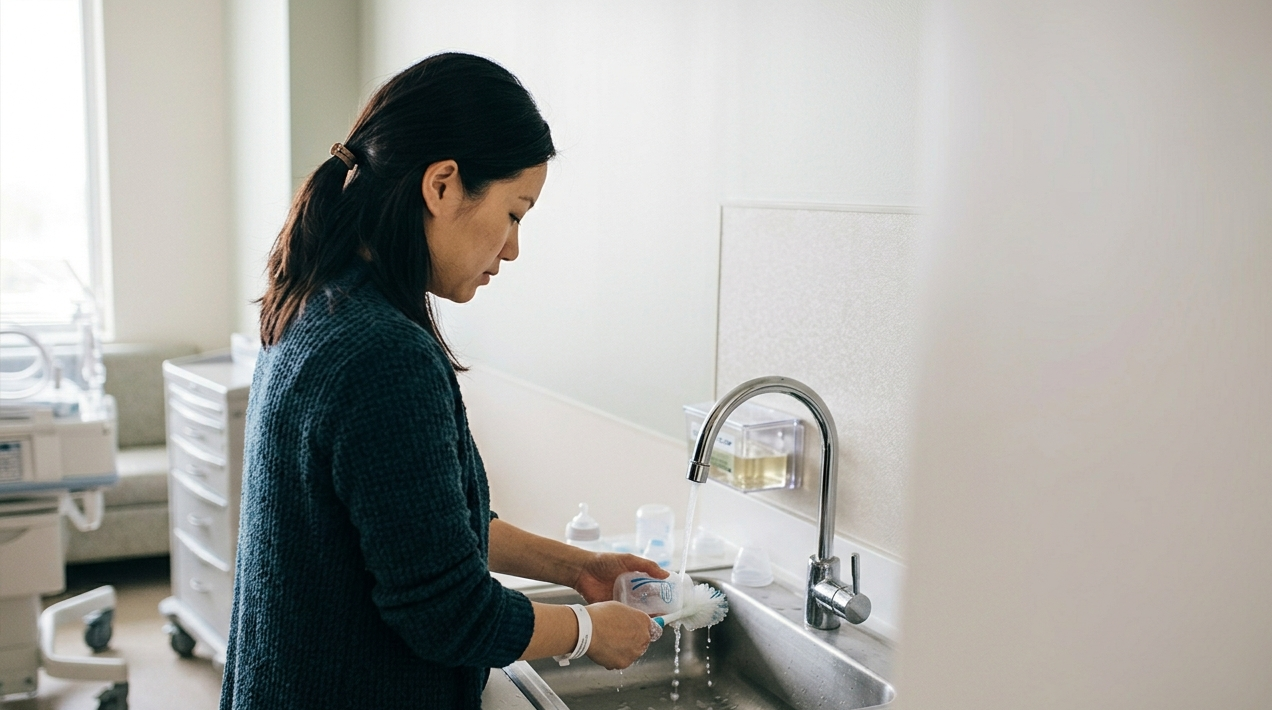
Your hospital should provide you with a space to wash and dry your bottles, although this may be a small sink and the water might not get hot. Consider a travel bottle washing kit! It can make things easier for washing, drying, and keeping bottles and parts organized in a small room with very limited counter space.
What to pack:
Bring enough of your baby’s formula for 48-72 hours (it can be useful to have some pre-made in shelf-stable bottles that are available at some stores).
Bottles and parts
Purified bottled water
Bottle dish soap (e.g. Dapple brand)
TOP TIP — Formula dispensers make it easy to portion individual bottles and know how much powder to bring for your stay. They also make it easy to mix up a bottle quickly!
Food and drink
As your baby comes round after surgery and anesthesia, they will be uncomfortable. It’s likely they won’t want to eat much. If they do want to eat, it will probably only be small portions of easy-to-eat snacks. Bring food your child likes and is very familiar with (puree pouches or jars, yoghurt, simple snacks). Now is not the time to introduce broccoli! It’s also totally ok if they just want milk for a day or two. If you have any concerns about your child’s appetite after surgery, ask the medical team.
What to pack:
Whatever cup or straw/water bottle your child drinks from easily and most comfortably (now is not the time to practice open cup drinking!)
Honey or lemon for tea/warm drinks for parents (hospital cafeteria options can be limited and expensive)
Snacks and food for you — it's easy to forget to eat, and hospital food can be pricey and not great. We recommend things that don’t need to be kept cool. Consider bringing a mixture of snacks that are comforting, but that will also give you energy and nutrition. Trail mix, granola bars, popcorn, fruit (small oranges, bananas, apples), dried fruits, jerky, protein bars, seaweed snacks, edamame, veggie chips, Sunbutter pouches.

TOP TIP — Check your hospital’s allergen policy before packing snacks. Many pediatric wards do not allow nuts because of the severity of nut allergies in some patients. SunButter or other seed-based alternatives are a safe swap!
Comfort and entertainment
There will be a lot of waiting: while your child is checked in, during their surgery, and then while they recover. This is where you can think about what things from home might make this experience a bit easier on them but also on you. Our advice: go easy on yourself. Screens are ok. There’s not a lot of other things to do in a hospital and your child will not be feeling their best. Some simple books, a favorite cuddly toy, a blanket, pillows for you…think what might make this feel more comfortable.
What to pack:
Pacifiers, if using
Teethers
Blanket from home
A comfort item that smells like home or like a parent — a worn t-shirt placed near baby can be soothing, especially if you step away briefly
Favorite soft toy
A few favorite books
iPad or tablet
Stickers, crayons, or simple mess-free activities if the child is a bit older
TOP TIP — One of our moms created a mobile over the hospital crib for her baby. She attached cabin wrap to the four corners of the crib to create an X shape. Then she attached hanging toys which were great for her baby to bat at while lying in bed after surgery.
Essentials
This is where it’s so easy to forget something! And if you’re new to spending some time in hospital, you also don’t know what to expect. These are things our parents have found useful to have to hand during their child’s CLM surgery.
What to pack:
Chargers – phone, tablet, headphones, laptop…
Bring a long phone/tablet charging cable (6ft+)! Hospital outlets are never where you need them. You can buy long charging cables easily online.
Toothbrush and toothpaste
Any toiletries or personal care items you use
Consider bringing dry shampoo! You should have access to a shower in your hospital but it will likely not be the world’s most luxurious bathroom and it won’t be predictable when you will have time. Dry shampoo will hold you over for a couple of days if you are not able to wash your hair properly.
Any medication for you and your child (clearly labeled)
Wipes and diapers for 2-3 days (your hospital should provide some but if you have a favorite brand, bring those)
Muslin cloths, if needed for baby
Diaper rash cream
Hand lotion, chapstick and/or a simple lip balm — hospital air and constant hand sanitizer are brutal on skin. Keep both fragrance free to not overwhelm the small space you will likely be in and to avoid skin irritation.
Pillows/blanket to feel more comfortable (your hospital will provide sheets and basic bedding)
Reusable water bottle
TOP TIP — One of our moms recommends a folding cart or caddy for shlepping all of your stuff around — “our car seat snapped into a caddy that ended up doubling as a luggage cart”
Clothes
Depending on your child’s age, they will likely be more comfortable just in a diaper/underwear and the hospital gown. Especially while the chest tube is in, you will not be able to dress them. Keep any clothes loose, light, and easy for nurses to work around.
What to pack:
For baby
Loose, comfortable clothing that is easy to get on/off
A warm hat in case it gets cool in the room
Socks or booties (can be helpful to stop baby from grabbing or pulling at the IV line)
Clothes for going home (nothing too tight, scratchy, itchy—the wounds will still be tender)
For parents
If breastfeeding or pumping, nursing-friendly tops
Comfortable clothes you don’t mind sitting around in all day
A change of clothes in a ziplock bag for spit-up, surgical-day accidents, etc.
Sweater/cardigan in case the room gets cooler
Non-slip socks or slippers
Pajamas
Underwear for 2-3 days
TOP TIP — Button-front, snaps, or zip-front tops for baby are easier to work around lines and incision sites than anything that goes over the head. Your baby might have an IV, in which case you will want to bring pajamas/clothes without footies

Practical/logistics
Consider setting up a group text/CaringBridge page beforehand so you're not fielding individual messages during a stressful time
Car seat — make sure it's installed and ready, and consider how the chest harness will sit against the incision site.
A bag or tote to keep things organized in what will likely be a small and cramped space
Contact list of people who need updates
Copies of insurance cards and any relevant medical paperwork/records
Any IDs you need
A folder or binder for discharge paperwork, prescriptions, follow-up instructions
Cash if needed for parking/vending machines
TOP TIP — Consider bringing a notepad and pen or get familiar with a phone notes app. There will be a lot of information coming at you and it can be hard to take it all in, especially when tired and stressed. Take notes, write down the names of doctors you met with, if there is anything you need explained, note down questions as they come up. You are an important member of your child’s care team!